




City environments are primed to respond heatedly to increasing global temperatures. Selecting surfaces for their cool qualities can contribute to more human-friendly conditions.
The phenomenon known as the urban heat island effect is having a new moment in the sun, even though it was first identified in London more than 200 years ago. It explains why cities and towns or any large concentration of buildings, roads, footpaths and other hard infrastructure — which has a high thermal mass, or ability to absorb and retain heat — get hotter than surrounding green areas during the day, and remain hotter overnight.
In this time of climate change and more extreme summer temperatures, the urban heat island effect is exacerbated, causing inner-city and suburban dwellers discomfort to the point of threatening their wellbeing. For example, the western suburbs of Sydney in Australia now frequently experience summer temperatures of around 50oC. In such weather conditions children get less outdoor play time, elderly people may die of heat-related causes, and other adults scurry from air-conditioned cars, to air-conditioned workplaces, to air-conditioned shopping malls and air-conditioned homes if they can afford them.
The urban heat island effect has in recent years contributed to skyrocketing energy bills for urbanites. Harder to quantify is how it cramps our sense of ease with being out and about in the community during increasingly long, hot summers.
A body of research is emerging to show that choices made by property owners, and managers of public areas in relation to roof and ground surfaces can do a lot to lower the mercury in any vicinity, reducing the risk of adverse health and lifestyle responses, and making cities more enjoyable, affordable places to be.
The gold standard remedy for urban heat islands is to add greenery.
“When you have vegetation, you have moisture; the vegetation produces moisture by transpiration, cooling the air and also reducing surface temperatures,” says Sebastian Pfautsch, Associate Professor in Urban Studies at Western Sydney University, who applies scientific research to dialing down the heat in all kinds of urban environments.
This single, plant-based strategy to combat the urban heat island effect also plays into what residents and councils can do with roofs and ground surfaces around buildings and in public areas, to increase comfort, reduce the need to resort to air conditioning indoors, and spend more time outdoors. And there are surface strategies to bring down temperatures and make life in and around cities more enjoyable.
Roofing choices that moderate the urban heat island effect
Go light! — In initial construction or renovation phases of any building, choosing a light-coloured roof surface that will reflect more solar energy than darker surfaces makes a significant difference to the amount of heat that structure will retain.
Research commissioned by the Australian federal government and carried out by the University of NSW found that ambient temperatures in Sydney could be reduced by 2.4oC if the city’s roofs were generally light in colour, and that a light rather than dark-coloured house roof can reduce temperatures indoors by up to 10 degrees on hot days.
“This would have an enormous impact on the urban heat island effect in our city,” said Planning Minister for the Australian state of New South Wales, Rob Stokes, when in November 2021, he announced plans to legislate for light-coloured roofing on future buildings across the country’s most populous jurisdiction.
Plan for plants — Although lightening the colour of roofs can be considered the low-hanging fruit in efforts to reduce the urban heat island effect, applying some form of green roof cover — succulents and mosses are low-maintenance choices that require only a lightweight layer of growing medium such as soil — may soon become the epitome of cool.
For a start, green roofs require flat, only slightly angled roofs, rather than traditional, steeper, gabled roofs, which Pfautsch says immediately lowers absorption of solar radiation because the angle to the sun results in greater reflection of light. Adding plants to flat-topped buildings, says Pfautsch, means that “not only does the vegetation absorb part of the radiation or solar energy during photosynthesis, evaporation from that surface cools your house and the surrounding air.”
Research by the University of Technology Sydney is also showing strong indications that underplanting rooftop solar systems with vegetation has the dual effect of cooling the solar panels and increasing their performance (paradoxically, photovoltaic cells which harness the sun’s energy, produce electricity more effectively at reduced operating temperatures), and cooling the building below.
Ground surfaces that increase summer comfort levels
Apply shade — When you have shade, it almost doesn’t matter what kind of surface you use, says Pfautsch — rubber, bark chips, artificial grass, even concrete are fine from a temperature perspective. “In the shade, any material will only get to about or slightly higher than ambient air temperature because of the heat transfer from air into that surface,” he explains.
Just add nature — In addition to providing shade, going green is generally good. Patches of lawn, garden beds, planted road verges, driveways with vegetation on either side and up the middle of concrete or paved tracks (bring back the Fifties!) — such swaths and avenues of greenery throughout built environments all help break up the urban heat island effect. Grass is cool underfoot, and through shade and transpiration, plantings create microclimates around homes and commercial buildings that provide lower temperatures than a stark built environment can offer.
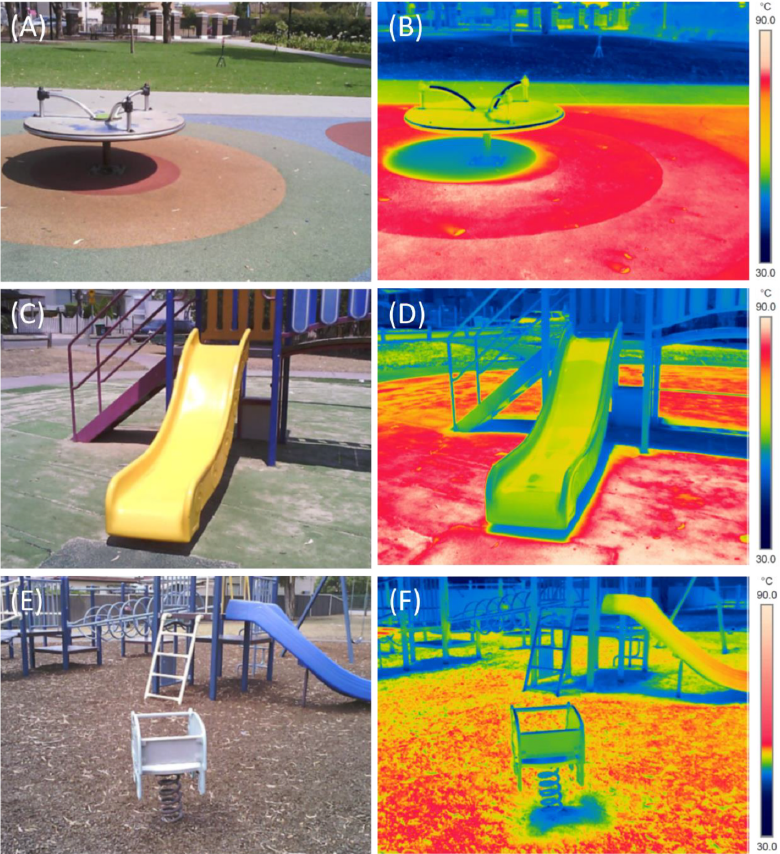
Make a play for sand castles — Pfautsch, who has tested many surface alternatives for their absorption of heat in unshaded areas on high-temperature days, says sand is one of the coolest ground surfacing options around. Unexpectedly, artificial grass is one option that, under summer sun, can reach temperatures that burn skin on contact.
Lighten up — as with roofing, dark-coloured, solid surfaces underfoot are the most uncomfortable and even dangerous in the sun, because they absorb and retain heat, and can reach skin-searing temperatures in unshaded public areas and around the home. Pfautsch favours light-coloured timber as an underfoot surface material, for its low thermal mass, but says even light-coloured paving is preferable to dark surfaces when exposed to the sun.
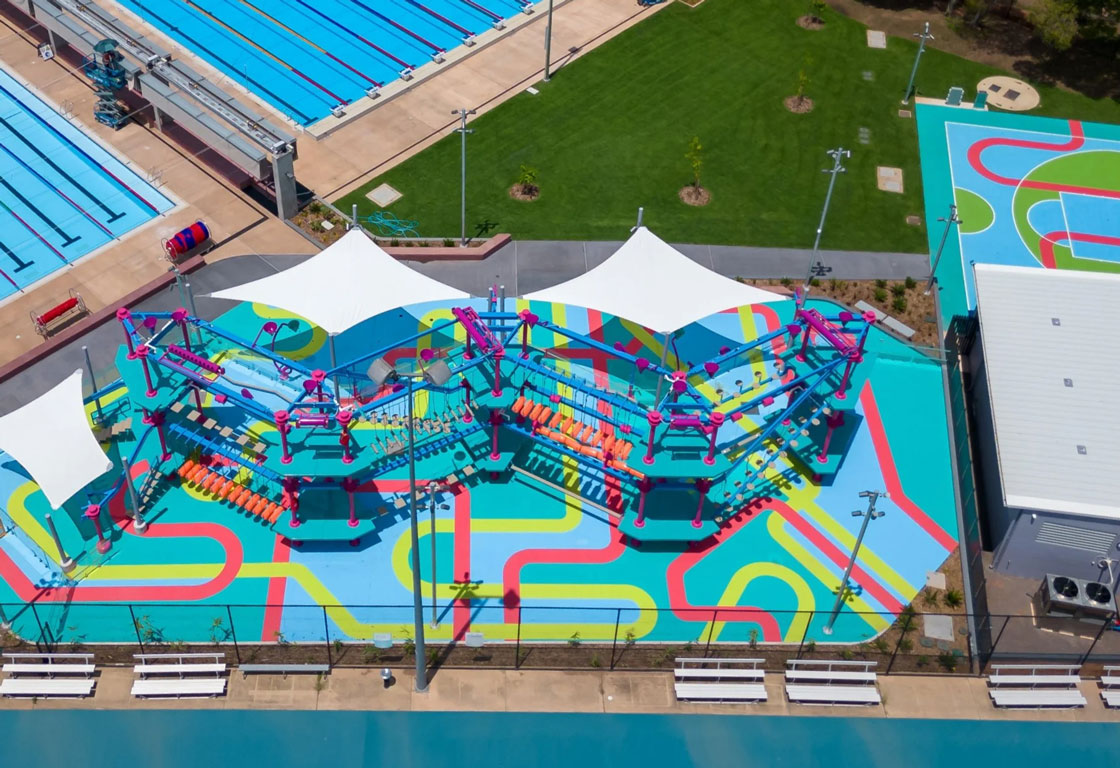
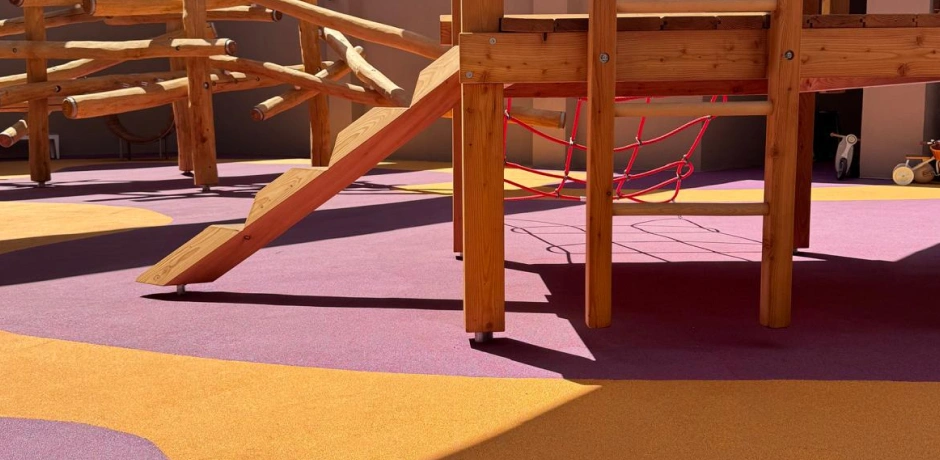
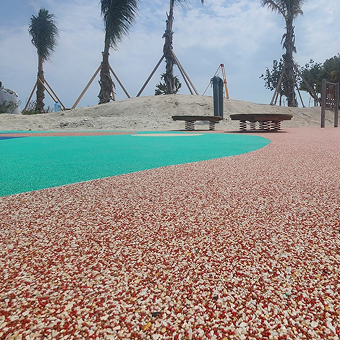
Pour polyolefin with purpose — Ground surfaces are often required to fulfill more than one purpose: around wet areas such as pools or splash parks, they need to be slip resistant; under children’s climbing or play equipment, the requirement may be for fall attenuation. Pfautsch’s meticulous temperature testing of surfaces in full sun on hot days has revealed that PolySoft, a firm, enduring, slip-resistant and fall-attenuating surface made up of polyolefin beads united by an aliphatic binder, keeps its cool, particularly when applied in lighter colours of the broad available palette. He says there are other cool options in the non-slip or fall-attenuating rubber-surface categories, but that PolySoft “consistently delivers very low surface temperatures”.
Around the world, town planners are recognising the cooling qualities of green walls, green roofs and plant-filled zones, for reducing urban heat-island effects and ensuring myriad comfortable opportunities for people to be outdoors and reduce the costs of living in the city. Mattheos Santamouris, Professor of High Performance Architecture at the University of NSW, calculates that applying “cool roof” policies alone could decrease the energy consumption of uninsulated western Sydney homes by up to 50%.
Overall, combining planted areas with the coolest roof and ground-level choices appropriate to different use cases can turn urban heat islands into happy places.